Uncategorized

Time to change Title IX’s three-prong test

At The Guardian last week, I had a story on Title IX’s history and impact. It also delves into the issues the law — in this case, strictly the sports aspect of what was intended to be about education — will face in the future.

https://www.theguardian.com/sport/2022/jun/23/50-years-of-title-ix-the-us-law-that-attempted-to-make-sports-equal

I’d also recommend some excellent work at USA TODAY, starting with this timeline that is focused on but not limited to sports:

https://www.theguardian.com/sport/2022/jun/23/50-years-of-title-ix-the-us-law-that-attempted-to-make-sports-equal

Other parts of their anniversary investigations are behind a paywall, though if you’re an Apple News subscriber, you can find the stories there:

https://www.theguardian.com/sport/2022/jun/23/50-years-of-title-ix-the-us-law-that-attempted-to-make-sports-equal

It’s great to see my old paper revving up its investigative and analytical work. Almost makes me wish I was still there. Almost.

But enough about me and my career decisions. Let’s talk about how Title IX should be better.

For starters, we’re focusing on the wrong thing. Specifically, the gap between roster spots available for men and roster spots available to women. From one of the USA TODAY stories:

None was larger than the University of North Carolina, though. It would need to add 395 female roster spots, the analysis found.

I’m not predisposed to praise UNC’s sports program. I went to its arch-rival.

But … seriously?

The numbers are correct, I’m sure. But they show how Title IX watchdoggery is really missing the boat.

In the 2021–22 academic year, North Carolina’s women went unbeaten in lacrosse to claim their third national championship. The tennis team reached the NCAA semis after losing a streak of ACC titles going back 2015. The nine-time champion field hockey team fell short of the Final Four for the first time since 2008. The basketball team went 25–7 to return to its usual spot in the Sweet 16. The soccer team lost in the first round and will have to content itself with its 22 national championships (1 AIAW before the NCAA took over). The volleyball team made the NCAA tournament, and the cross-country and swim/dive teams finished in the top 20.

Does this seem like a university that doesn’t emphasize women’s sports?

And like a lot of colleges, North Carolina has several women-only sports: field hockey, gymnastics, rowing, softball and volleyball. Three sports are men-only: baseball, football and wrestling.

So why isn’t North Carolina in compliance?

Because the undergraduate student body in Chapel Hill is 60% women.

The primary intent of Title IX (educational opportunity) has been overwhelmingly successful at UNC. That makes the secondary intent (athletic opportunity) much harder to fulfill.

And that’s typical. A school with 60% women is increasingly the norm these days.
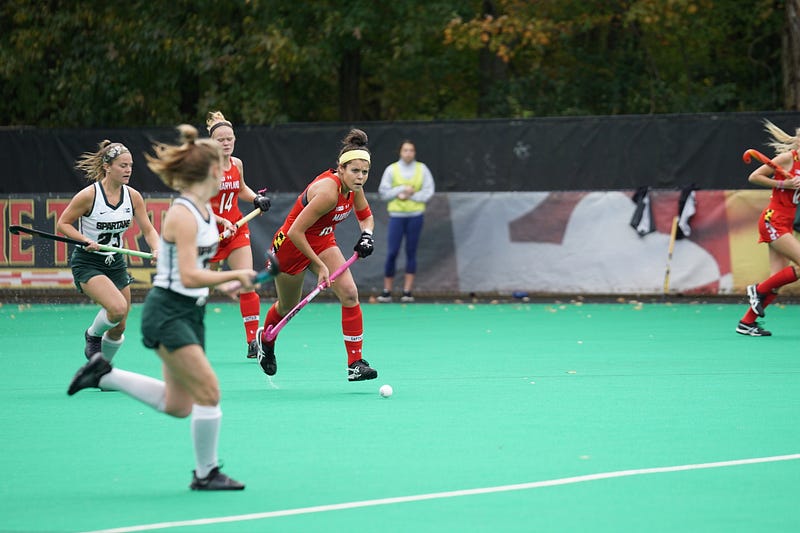
Photo by Jeffrey F Lin on Unsplash

Proportionality is just one of the three “prongs” in Title IX compliance, but it’s the one advocates and journalists are stressing these days. For one thing, it’s easier to quantify than “does the university have a history of expanding its programs for” or “is the university fully accommodating the interests and abilities of” the underrepresented sex.

The latter is archaic. The vast majority of student-athletes enrolled in their college of choice with the intent of playing that sport. Polling students who either chose not to play a sport in college or weren’t good enough to be recruited is nonsensical.

The “history of expanding” its programs quickly hits the problem of having no more reasonable programs to offer. A lot of colleges have added equestrian, a tiny sport whose competitors generally don’t need scholarships to go to college, just to make up the numbers.

For reference of the number of teams in each sport, start with the 2020–21 snapshot from the latest NCAA participation report:

https://www.theguardian.com/sport/2022/jun/23/50-years-of-title-ix-the-us-law-that-attempted-to-make-sports-equal

Field hockey and beach volleyball are for women only. Bowling has only three men’s teams. Women’s teams account for more than 80% of the teams in volleyball, equestrian, gymnastics and rugby, and more than 70% in rowing. (There are 940 men’s baseball teams, though that’s offset by 983 women’s softball teams.)

Would a national survey of students’ interests show us a pent-up demand for 50-woman rowing teams? Or bowling or equestrian? And would it show that men have no interest in gymnastics, rowing or volleyball?

But if you’re a “men’s rights” advocate, it’s time to go back to your cave. Women account for just 10.6% of wrestling teams, and that’s after a surge from 4 to 30 women’s teams since 2019. The NCAA’s overall participant count is still 56% men. The NCAA disburses massive prizes for men’s basketball and nothing for women’s basketball.

And there’s an elephant in the room, represented neatly by Alabama’s mascot. That would be 657 football teams.

Ah, football. The benefactor of all other sports, right?

Well, sometimes. At the very biggest athletics departments. Maybe. See the Knight Commission’s work in conjunction with Syracuse, or see Sportico’s database of big schools.

Mark Ziegler, one of the clearest-eyed columnists on such matters in the country, puts it more bluntly:

The next thing to understand is that women’s sports, with few exceptions, lose money at the intercollegiate level. Lots and lots of it.

Only about 25 of 1,100-odd NCAA athletic departments actually turn a profit, all of them in power conferences with huge TV contracts. Seventy percent of San Diego State’s athletic budget is subsidized by state tax dollars, student fees or booster donations.

And Ziegler’s piece points to a bleak future, in which football teams split off entirely from the university. Sure, lawyers would fight about it for years, but it could be a serious threat.

So what can we do? It’s not my place to rewrite the law, and not just because I’m a middle-aged man. But I have some suggestions …

Take a holistic view …: For some sports, going school-by-school misses the point. Why not go sport-by-sport? Does each sport have enough colleges offering it? Does an accomplished athlete in a given sport have enough places to play?

… especially with Olympic sports: The NCAA participation stats from yesteryear show the occasional archery or badminton team. Why not find a few schools that are capable of hosting such programs? A partnership with the USOPC could lead to small but successful programs that give students more opportunities while also boosting the U.S. teams. And in this holistic view, give exemptions so that a men’s team can exist where a women’s team exists — don’t just have schools add women’s badminton or women’s modern pentathlon for gender numbers. Maybe we can even have some men’s field hockey teams.

For proportionality, go by a 50–50 split, not enrollment: Why punish a school for being so successful at enrolling women? Conversely, why let a school off the hook for being 60% male, still? Encouraging more women to attend a traditionally male engineering school is a win-win, isn’t it? And basing proportionality on enrollment, again, is based on the assumption that students go to a school and then peruse the athletics department’s offerings.

Force football to pay the bills: Football advocates have long argued that their sport pays for all the others. Again, not always. In fact, rarely. The main reason for that is the proliferation of football facilities and staffers. Instead of funding the women’s soccer coaches’ recruiting budget, that money goes to the assistant to the assistant tight ends quality control coach on the football team. Let’s say this — if football-playing schools want an exemption from Title IX’s proportionality prong, they can do so if football really is paying for other sports.

Make sports match the general public’s interest, even if sports aren’t varsity: Remember JVs? They still exist in high school. The only junior varsity I know of in college is North Carolina’s men’s basketball JV. (As much as I defended UNC earlier, adding a women’s JV seems reasonable.) How many more good soccer players are out there? Probably more than we have equestrian athletes or even rowers.

By current accounting, every difference in men’s and women’s numbers is a “lost opportunity” or “lost scholarship.” But what “opportunities” do we want? A spot on a JV soccer team is more attainable to a more diverse group than a spot on a team in equestrian or other sports (rowing, squash) that generally exist only in expensive private high schools. And in terms of “lost scholarships,” there are a lot more athletes who “lose” scholarships in basketball players (men’s and women’s) than in the prep-school sports.

We can make Title IX work. We have to. It’s going to be under attack in the coming decades from people with reasonable (the numbers don’t work) and unreasonable (the recently emboldened patriarchy).

It’s been successful so far. Continued success means continued vigilance and examination.

comedy, tv

Farewell to a great SNL group

Once upon a time, Saturday Night Live went through waves of wholesale changes, allowing us to divide the show into several eras.

Original

1975-80: The original Not Ready for Prime Time Players dwindled from their 1975 debut to the end of their fifth season in 1980. Chevy Chase left after one season and change, later replaced by Bill Murray. Next out were John Belushi and Dan Aykroyd, leaving the core of Murray, Jane Curtin, Garrett Morris, Laraine Newman and Gilda Radner to be supplemented by the quirky duo of Al Franken and Tom Davis, later joined by Harry Shearer and some cast appearances by band member Paul Shaffer and an array of bit players.

(Coincidentally, as chronicled last week in a marvelous WaPo oral history, Radner, Shaffer, future SNL cast member Martin Short and Short’s SCTV castmates Eugene Levy and Andrea Martin had all appeared together in a 1972 production of Godspell.)

Lorne-less

1980-84: Lorne Michaels, the man now synonymous with his show, departed after that 1979-80 season along with the entire cast. Enter a new group that couldn’t carry the torch aside from a young featured player named Eddie Murphy, though Gilbert Gottfried went on to an entertaining career. Only Murphy and Joe Piscopo survived the 1981 clearout. The cast overhauls were a little less drastic the next couple of years, and four 1982 and 1983 arrivals — including Jim Belushi and a very young Julia Louis-Dreyfuss — carried over to the next season …

1984-85: Producer Dick Ebersol, best known for his distinguished career in sports, swung for the fences in this unique season packed with established talents such as Short, Billy Crystal, Christopher Guest, Rich Hall, Pamela Stephenson and the prodigal Harry Shearer.

Carvey/Hartman to Sandler/Farley (via Myers)

1985-86: Michaels returned in 1985 and started from scratch, building around the hot-at-the-time Anthony Michael Hall and some people who would eventually be huge — Robert Downey Jr., Randy Quaid, Damon Wayans and Dennis Miller. It sucked.

1986-95: So on top of the complete overhauls in 1980, 1981 and 1985, SNL had a near-total clean slate, keeping only Miller, Jon Lovitz and Nora Dunn. Then, just as Duke coach Mike Krzyzewski saw the benefits of his job-saving class in 1986, Michaels brought in a show-saving class — Dana Carvey, Phil Hartman, Jan Hooks, Kevin Nealon and Victoria Jackson. Add Mike Myers (and briefly Ben Stiller) in 1989, and you have a strong case for the show’s all-time best cast.

That group evolved slowly over the next few years. Departing (in order, more or less, though some cast members returned for occasional appearances): Dunn, Lovitz, Miller, Hooks, Jackson, Carvey, Hartman. But the cast kept swelling with the additions of (among others) Chris Rock, Chris Farley, Julia Sweeney, Tim Meadows, David Spade and Adam Sandler. (Most of the others were women, and unfortunately, this was not a time in which women were developed into stars on the show.)

The loss of Hartman in 1994 nearly destroyed the show. Myers stuck around for increasingly infrequent appearances, and Michaels once again reached out to get some veterans who were, to some extent or another, already recognizable — Michael McKean, Mark McKinney, Chris Elliott, Norm Macdonald and Janeane Garofalo. Unfortunately, no one told Sandler, Spade and Farley that they weren’t in charge of the show, and they ran it into the ground. Garofalo fled after a few months of being underused, citing a sexist atmosphere.

Time for another clearout. McKinney and Macdonald stuck around along with lower-profile castmates Tim Meadows and the recently added Molly Shannon.

Continue reading
sports

Appeals court lets travesty stand, leaving soccer trainer in prison

Maybe their hands were tied. Maybe they couldn’t hold the overzealous prosecutors, prodded by influential snowplow parents (snowplows are indeed useful in upstate New York), responsible for soccer trainer Shelby Garigen’s plea deal.

In any case, an appellate court snuck a decision past me in late January, deciding they didn’t need to take a real look at the shenanigans that landed Garigen in jail because she was planning to have sex with someone of legal age in New York but made the mistake of getting him to send nude pics to her.

Here’s the decision:

A few points:

Specific assertions the appellate judges addressed

The judges first say these points don’t fall “within the ‘very circumscribed’ exceptions to the validity of an appellate waiver,” so they’re already setting a high bar to clear.

Point 1: Because the meetup (which proved to be a setup to arrest Garigen) and the sentencing took place after the person in question turned 18, Garigen’s appellate lawyer argues that the person in question should’ve been the one speaking, if he so chose, at Garigen’s sentencing. Instead, his parents spoke. Rephrased in the appellate ruling: “(Garigen asserts that) the parents of a victim (“Victim 1”) made false and biased statements against Garigen and should not have been allowed to speak at her sentencing.” The father’s theme continued when he offered his apparent expert opinion on appellant’s psychiatric diagnosis.” Garigen’s lawyer: “First, Victim 1’s father is not a psychiatrist.”

The appellate court says the lower court was within its rights to hear the parents of the “victim” (again, a legally consenting young man who wanted to have sex with an older woman) as long as Garigen was able to respond at the sentencing. They do NOT address, as far as I can see, the question of whether the father of the “victim” should have been allowed to offer expert opinions on Garigen’s mental health. Nor do they address the topic of whether a more competent lawyer would have offered a more robust response.


Point 2: Re-phrased by the appellate court as “(Garigen asserts that) Victim 1’s father had improper control over the prosecution of Garigen’s case.” The father is a former prosecutor who has worked on cases of sex crimes. (The mother works for the Erie County DA’s office.) Garigen’s appeals lawyer: “The father advised the court that he ‘helped the U.S. Attorney’s Office prosecute this case.’”

The appellate judges say the record doesn’t support Garigen’s claims. They do not support their assertion.


Point 3: Garigen’s lawyer further argues that the father’s words imply that he had read the Presentence Report, and that document is supposed to be read only by the court and respective counsel.

The appellate judges wave this accusation away, not convincingly, taking a statement out of context from the 28th paragraph of Garigen’s appeal.

What the appellate judges didn’t address

Given their insistence that there’s nothing to review here because Garigen should’ve known the risks of accepting her plea deal, it’s not surprising the appellate judges didn’t address the fact that the parents of the “victim” presented several arguments that are, in fact, hogwash.

From what I’ve written before: The parents claim their son has fallen out with a friend who was also 17 when he sent pictures to Garigen, and they say that’s Garigen’s fault. Garigen’s lawyer retorts: “(The mother) fails to note the real possibility that her 17-year-old son may have withdrawn from friends and family because the FBI became involved by interviewing both him and his friend, Victim 2. Notably, Victim 2 declined to provide a Victim Impact Statement and requested no further law enforcement contact.”

And: The parents, in the characterization of Garigen’s lawyer, focused on Garigen “luring” their son — again, a consenting adult — to have sex. They don’t harp on the fact that the only charge she faces, “child pornography,” is the direct result of their son sending her dirty pictures.

Again, perhaps those aren’t questions for the appellate court to address.

I find it hard to believe, though, that this argument should be ignored:

Garigen’s lawyer draws a distinction between pictures a young man posts to Snapchat and what we would normally call child pornography: “Sending a self-picture of an ‘unidentified’ penis (i.e., Victim 1’s face was not in the picture) to a self-deleting application would not in any way ‘create a market’ for child pornography and contribute to the victimization of minors.”

In other words … the entire basis for the prosecution of this case may have been built on a misapplication of the law.

If that’s not in the appellate court’s jurisdiction, it should be. If the appellate court can’t do more to right wrongs that were done because Garigen’s original lawyer failed to object in time, that needs to change. Time to rewrite some laws in New York.

We all know what happened …

  • A teenager of consenting age started flirting with his trainer, and things progressed to where they started talking about having sex and eventually agreed to meet up for that purpose.
  • The teenager’s well-connected parents got wind of it and refused to assign any responsibility to their kid. All her fault, they decided.
  • A terrified, ill-informed woman took a plea deal but hoped for a reasonable sentence.
  • Those well-connected parents took advantage of their connections to bulldoze her lawyer.
  • An 80-year-old judge barely took the time to consider the motion by her replacement lawyer.

Maybe the appellate court can’t address it. It’s a pity we don’t have more watchdogs in the media who can get to that courthouse, the FBI’s Buffalo office and the U.S. Attorney’s office to ask if it’s really necessary to take up prison space for this. Probation? Sure. A ban from working in soccer? Already happened. But prison? I’m sure taxpayers are thrilled.

I’ve asked before if anyone wants to comment on this case. I’ll do a follow-up post if so.

Previous posts:

And meanwhile …

More than five and a half years after his arrest, Juan Ramos might finally be forced to go to court to answer the allegations that he began a sexual relationship with a player when she was 13. Maybe the court date is set for April 11 at 9:30 a.m. in Room 4810 of the Broward County Courthouse.

I say “might” because Ramos already managed to skate by when he and his counsel, Kevin Kulik, were no-shows at a calendar call in October. A capias warrant was issued, but Kulik won the day with the “we didn’t know” defense.

So this document doesn’t instill confidence:

If you have a sharp eye, you may notice that the 500 S. whatever in Fort Lauderdale is not the address Kulik listed on his “my client and I didn’t know” brief. That was 1293 North University Drive #204, Coral Springs, FL.

That’s the address of a UPS Store. I’ve verified that his office is in that store.

One thing Ramos and Garigen have in common is that they’re listed as “ineligible” in the SafeSport registry. They may never work in soccer again — assuming people do the most basic of background checks. And that’s fine.

But there’s no question which crime is less serious and which crime has been more seriously prosecuted. And they’re not the same one. Juan Ramos has been walking around free since the Obama administration, and Shelby Garigen is in prison.

New in the SafeSport registry …

As long as I’m checking, here are the latest names added to the database. Maybe I’ll end up investigating some of these as well.

March 28: Martin Pantoja, San Mateo, Calif. — Criminal Disposition – Sexual Misconduct; Criminal Disposition – involving a minor. Ineligible (subject to appeal). Pantoja was arrested in February. I found one Martin Pantoja in San Mateo but I’m not linking here just in case there are two Martin Pantojas of roughly the same age in the area.

March 25: Jonathan Ledesma, Highland, Calif. — Allegations of Misconduct. Temporary Suspension. Arrested March 17; charged with numerous counts of sexual assault on a minor. Police say he started coaching her at age 9 in AYSO.

March 24: Kristen Wessel, Colorado Springs, Colo. — Allegations of Misconduct. Temporary Suspension. Court date April 28. Charge is listed as a felony count of “failure to comply.”

March 24: Allan Hilsinger, Cincinnati, Ohio — Allegations of Misconduct. Temporary Suspension. Arrested in March on two counts of gross sexual imposition involving a 10-year-old girl.

March 18: Timothy Harrison, Babylon, N.Y. — Allegations of Misconduct. Temporary Suspension. A Timothy Harrison of Babylon was arrested in March over an alleged sexual relationship with a minor in 2013, but the stories list him as a special ed teacher who coached lacrosse and basketball, which raises the question of why U.S. Soccer and not the other sports federations are listed with that name in the SafeSport database. If it’s the same guy, then he should also be suspended from the other sports. If he’s not — wow, what a coincidence.

March 16: Dennis Doyle, Beaverton, Ore. — Allegations of Misconduct. Temporary Suspension. Doyle founded a club called Westside Metros and was still vice president of the since-renamed Westside Timbers until he was arrested on child pornography charges. He was also mayor of Beaverton for 12 years.

March 10: Eric Eskelsen, Blackfoot, Idaho — Criminal Disposition. Permanent Ineligibility. I didn’t find anything about him.

March 7: Evan Thornton, Mount Pleasant, S.C. — Criminal Disposition – Sexual Misconduct; Criminal Disposition – involving a minor. Ineligible. Substitute teacher and soccer coach was arrested in December on charges of unlawful sexual activity with a 16-year-old student. He was a varsity high school coach before age 23 for some reason.

Feb. 28: Walter Jones III, Roseville, Calif. — Criminal Disposition – Sexual Misconduct; Criminal Disposition – involving a minor. Ineligible. I didn’t find any details. There’s a Walter Jones arrest listed in the Placer County inmate records, but if it’s the same guy, the only thing the records add is that he’ll have a May 11 court date.

Feb. 28: Ian Ebert, Irvine, Calif. — Criminal Disposition – Sexual Misconduct; Criminal Disposition – involving a minor. Ineligible. An Irvine coach by that name was arrested in 2013, so that’s either a belated addition to the database or an astounding coincidence in which someone with the same name in the same town was charged with the same crime.

Feb. 14: Rory Dames, Oak Brook, Ill. — Allegations of Misconduct. Temporary Restrictions: Coaching / Training Restriction(s), Contact / Communication Limitation(s), No Contact Directive(s). You may have heard of this one.

Feb. 9: Eduardo Pinuelas, El Paso, Texas — Allegations of Misconduct. Temporary Suspension. No Contact Directive(s). I’m checking to try to match up a name I found.

Jan. 20: Amilcar Velasquez, no city listed — Criminal Disposition – involving a minor. Permanent Ineligibility. I found a soccer coach by that name, and I found someone by that name who was arrested, but they’re thousands of miles apart.

Jan. 10: Dylan Cline, no city listed — Allegations of Misconduct. Temporary Restrictions: No Unsupervised Coaching / Training, Contact / Communication Limitation(s), Travel / Lodging Restriction(s), No Contact Directive(s). There are several Dylan Clines out there.

Jan. 7: Brian Kohler, Warsaw, Ind. — Allegations of Misconduct. Temporary Suspension. No Contact Directive(s). Didn’t find details.

I hope people take an interest in this. The pro coaches understandably get the publicity. But while the names above represent a tiny percentage of the people involved in youth soccer, these cases deserve scrutiny. Of all parties.

Cross-posting at Medium

music

Video classics: Mötley Crüe

PITCH MEETING …

DIRECTOR: So here’s the idea. We have the guys go into this low-rent place in Chinatown. One wants to eat some of the food on the table, but he’s called in to go with the guys to confront some dude. Then a bunch of dudes with swords pop out to surround them, but it turns out all the guys in the band are martial arts experts, so they win a fight.

PRODUCER: Sounds cool. So do they get what they came in for?

DIRECTOR: Yes. They give the guy a dismissive wave and leave.

PRODUCER: So … why were they doing this? Did they bust up a sex trafficking ring or a mob operation or something?

DIRECTOR: Nah. It just looks cool.

PRODUCER: Got it. Hey guys, what do you think?

(Band snorts cocaine)

PRODUCER: OK, never mind. Anyway, can we work in a short snippet of the band playing?

DIRECTOR: Well, it doesn’t fit the story, but OK. How do we make it interesting?

PRODUCER: Tommy does a lot of cool tricks with his sticks and then looks like he’s putting himself in an armlock.

DIRECTOR: That works.

PRODUCER: Tommy? You cool with that?

(Band snorts cocaine)

PRODUCER: It’ll be fine. Here’s a pile of money.

sports, x marks the pod

Episode 10: Sports, ceremonies and stories

On Sunday morning, for the second time in seven months, I took apart my makeshift Olympic viewing station, which consisted of a second computer monitor perched on a TV table next to the sofa from which I could see the big-screen TV. I didn’t do quite as much work for Beijing as I did for Tokyo. I was just working for The Guardian, not NBC.

But there’s a certain melancholy to the end of the Olympics. When I covered the Salt Lake Olympics, they must have had something scheduled for the next day in the convention center that served as the media headquarters, because temporary walls were falling like the end of the Cold War. I was afraid to leave my table for fear that I’d come back with no place to sit.

Closing ceremonies are cool, of course, and you don’t always get to see it all on TV. In Salt Lake, we saw the international feed and NBC feed side by side. Viewers around the world saw a bunch of people painting a circle of ice in real time. NBC saw some commercials and then a circle that had been painted.

But the Olympic flame is extinguished, and we’re jolted back to reality. These days in particular, the reality isn’t particularly pleasant. Thanks, Putin.

Even without global political crises or an irrationally enthusiastic convention center demolition crew, the end of the Olympics can prey on my sentimentality. During the last event of the Games, the men’s ice hockey final, I handed off to someone in Australia. This was an event in China that I covered from my basement in the United States and handed off to Australia for a British newspaper. There’s something beautiful about that.

When I’ve been to the Olympics, I can sense from the staff and volunteers that they’ve come to the abrupt end of something they had been anticipating and doing for months or even years, In 2010, I left the beautiful, happy village of Whistler, wondering if I’d ever get back to someplace so beautiful — and knowing that I would soon be leaving USA TODAY after 10 years.

The best closing ceremony story I have is from Beijing. I was in a bus heading back to the media village while the fireworks were going off. We were going on a freeway offramp, and I could see, just sitting to the side, someplace you’d never be allowed to be in the United States, there was a young mother holding up a young child who must have two, maybe three. The mother was beaming, and the child was just looking on in awe as the fireworks exploded a couple of miles away. We weren’t really that close to the stadium. This child just got a glimpse of the Olympics from afar. I’m guessing this family didn’t have VIP status to go to all the venues. 

I hope that child grew up and volunteered for Beijing 2022 and got to see some of it. I hope that made an impression on him that there’s a much bigger world than the Chinese government is going to otherwise give him. 

Of course, my sentimentality and my optimism were killed the next morning when our flight was canceled and we wound up in a hotel next to the Hard Rock in Beijing, which is why I have a Hard Rock Beijing T-shirt. 

But it’s impossible to see something like that family by the side of the road and not think about the power of sports and the ceremonies around them. They can be absolutely over the top — unless you’re Torino, and the opening ceremony is as half-assed as everything else you did in hosting the Games. (And Italy is getting another chance? Weird.)

These ceremonies mean something. They help bring inspirational stories to life. And there were a lot of inspirational stories. These ceremonies just helped them resonate.

And that brings us back to something else that happened in the past couple of weeks. The Super Bowl. For the first time since X Marks the Pod launched, we have an actual generational brouhaha. So I’m going to talk about that for a bit and then tell some Olympic stories.

This is X Marks the Pod.

Continue reading
politics, sports

Gen X news, Feb. 1: Cynicism, the Olympics and Spotify

No podcast this week, and no, it’s not a Spotify boycott. The Olympics start tomorrow (yes, Wednesday, because the Games now kick off a couple of days before the Opening Ceremony), and even though I’m not giving NBC 10 hours a day, I’m still down for about 40 hours of live blogging and countless hours of prep work and previews. See my viewing guide.

I’ve also spent a lot of time changing my news diet. That involved a reworking of my 683 Gmail filters. Google could really make that easier, but as we’ll discuss in a bit, they’re the least problematic of the Big Tech companies in this post.

Also, I listened to last week’s podcast and decided that it sums up the state of American politics as well as anything I can produce right now. And in terms of great albums, it’s tough to top the Fishbone album discussed there. So if you haven’t listened to it yet or read the post (and I have the stats to prove that you haven’t), check it out.

Moving on …

It’s easy to say we should be skipping these Olympics because of China and COVID. But the moral calculus here depends on who’s being harmed. The 1980 Olympic boycott may have seemed justified at the time because the Soviet Union had stormed into the eternal quagmire of Afghanistan. It’s not fondly remembered. It didn’t change anything politically. It just cost athletes a chance to do something they’ve been trying to do for most of their lives.

Boycotts also rob us of inspiration that can affect things on a geopolitical level. Imagine if Jesse Owens hadn’t been in Berlin to stick it to Hitler.

And generally, cultural exchanges are positive. Paul Simon received plenty of criticism for Graceland, but who benefited from that? The South African government or South African musicians? F.W. de Klerk, who died late last year, spent the rest of his life grappling with a complex legacy he couldn’t quite face in full. Ladysmith Black Mombazo is still winning Grammys. You can draw the line, of course, at directly supporting a corrupt state and/or business with no side benefits, which is why Sun City is the best of the 1980s group protest songs. (Everyone rap along: “Bo-phu-that-swana is far away / But we know it’s in South Africa, no matter what they say.” And it’s hard to top Joey Ramone singing about Ronald Reagan and “constructive engagement.”)

Musicians can play elsewhere. Olympic athletes compete elsewhere, but there’s nothing like the Olympics, especially in the winter and especially now that NHL players aren’t going. Boycotting the Olympics would irreparably harm them. Not China’s government.

Gen Xers’ worst trait is cynicism. It’s too easy to pass a simple judgment and move on. It’s also easy to dismiss the IOC as a money-mad organization or dismiss Olympic broadcasts as too treacly. But at their heart, the Games are about people from around the world challenging themselves and coming together. And hanging out with Australian journalists and Icelandic handball players.

So when mixed doubles curling starts tomorrow, my biggest reservation in watching will be that I find mixed doubles a bit gimmicky for my taste.

In other moral dilemmas …

Spotify: Neil Young et al vs. Joe Rogan

By way of disclaimer: Yes, X Marks the Pod is primarily a Spotify podcast, leveraging the massive music library on offer. Also, I’m a NewsRadio fan and an erstwhile MMA writer.

(Actually, I consider Joe Rogan’s podcast the fourth-best thing he does or has done, behind NewsRadio, UFC commentary and his standup act.)

But with his podcast, Rogan is following Dilbert’s Scott Adams into the a state of delusion in which he thinks his whims outweigh expertise. He used to save his conspiracy lunacy for (pardon the obscure pun on “lunacy”) the moon landing, UFOs and other relatively harmless things. When he rants about vaccines and alternative COVID treatment, that’s a little more difficult to swallow.

That’s why Neil Young decided to withdraw his music from the service. Joni Mitchell followed suit.

The best-case scenario here is that Spotify, whose share price has plummeted, has to have a talk with Rogan or decide to post disclaimers. The controversy may also force more scrutiny of Spotify’s longer-standing issue of how much (little) it pays musicians. Nils Lofgren’s wife tied together the two issues with one clever tweet:

And the issues are tied together by Rogan’s contract. Musicians need a couple hundred streams just to make a buck (literally), but Spotify came up with $100m to pay Rogan.

So do we all follow Neil Young and ditch Spotify?

Well, you could do what Young did and make a deal with Amazon Music.

Which pays its musicians even less, at least by one accounting. And then you’re supporting Amazon and some unsavory business practices.

Besides, some musicians are making money through Spotify, and one of them is (was) Neil Young. Billboard calculated that Young could lose $754,000 a year by pulling his music.

And I found that story published verbatim on Joni Mitchell’s site with an laughable declaration at the end that posting an entire story from a paywalled site constitutes fair use. So if you buy Joni Mitchell’s music, you’re supporting copyright infringement and taking money away from journalists.

Moral decisions are complicated. Few people are completely virtuous or completely evil. Jeff Bezos, after all, propped up The Washington Post, which surely wasn’t the most profit-minded move he could’ve made with his money. Facebook is far too important as a communication tool for everyone to leave it now, and there are plenty of people who have the resources to make something comparable if they were so inclined.

Rogan himself is complex. He has plenty of enablers who think every question he asks or statement he makes is the unimpeachable truth. But he doesn’t even believe that. He’s not Alex Jones. He listens to people. Maybe at some point, he’ll listen to people who tell him it’s time to quit treating self-serving idiots as experts.

I’m also cautiously optimistic about Spotify’s practices moving forward, though a little private chat with Rogan would also help.

And elsewhere …

Wordle and your wallet: Want yet another Big Tech dilemma? How about the NYT buying Wordle and giving a tepid “well, it’s free for now” comment? Even if it’s free, that means the NYT is monetizing your data because it has to sell ads.

One roundup of the Twitter reaction captures the complicated ways of framing this move. Do you start using the many knockoffs instead of the one the NYT just bought? Do you have the right to criticize Wordle’s inventor for deciding he’s not going to spend the rest of his life creating content for millions of people — for free? Do you have the right to criticize the NYT for trying to make money that subsidizes its occasionally worthwhile journalism?

Generations after us have been brought up to expect everything for free — music, news, puzzles, etc. But someone pays, either through money or unpaid effort. At least, in this case, the guy who did the work is reaping the reward.

The vaccination that I get: The Mighty Mighty Bosstones broke up abruptly. Lead singer Dicky Barrett abruptly left his job as Jimmy Kimmel’s announcer. So is it a coincidence that someone named Dicky Barrett was credited as the producer of a song promoting an anti-vaccine rally? We can only hope.

Face off: Are you tired of taking off your mask so your phone or computer will recognize your face? Good news. Maybe.

Ms. Jackson if you’re nasty: Kudos to Janet Jackson, whose career was derailed by what should’ve been a harmless accident but refuses to bear a grudge.

So we’ll head into the Olympics on a nice note to go with all the encouraging COVID news. Let’s end a long winter with some warmth, and I don’t just mean the workouts you get shoveling all that snow.

And here’s the schedule to help you plan, assuming that you generally don’t want to stay up all night and that you really like curling (Google Sheet).

Featured image is me in front of the ski jumps in Whistler, getting ready to cover the 2010 Olympics.