Housekeeping note: If you prefer other platforms to Spotify, good news — I’m re-editing previous episodes for Spreaker, Apple and Google, where episodes will be available for a limited time. See next post (above, since this is reverse chronological).
This episode won’t be on other platforms because it’s dependent on music at Spotify.
In 1985, an up-and-coming band from Athens, Ga., released a quirky album that seemed a little puzzling to themselves, let alone a general audience. But in retrospect, how important was this album to the band’s development? And how good is it in its own right?
This is a Spotify/Anchor exclusive, taking advantage of the feature in which we can embed songs. If you’re a Premium user, you should get the whole song (though you can skip it if you like). Otherwise, you get 30 seconds, not of my choosing.
Fellow soccer lover, Popdose alumnus, freelancer and early 50-something Dave Lifton joins me to discuss why today’s music sucks. Or does it? Our conclusions may surprise you.
At the end, you’ll hear either 30 seconds (Spotify users) or the full blast (Spotify Premium users) of Metric’s Gimme Sympathy, comedian Matt Braunger’s take on white privilege, Jason Isbell’s 24 Frames and The Pretty Reckless’s’s’s Take Me Down. The discussion makes reference to those things and a few others things, such as:
Jason Isbell (like me, a former resident of Athens, Ga.) on donating his cut of the royalties from Morgan Wallen’s cover of his song Cover Me Up to the NAACP.
The bit with Julianne Moore dissing Twilight is from the film Crazy Stupid Love, which is great in places and cringe-worthy in others.
One clarification: Cardi B and Megan Thee Stallion’s WAP is due to be included on Cardi B’s next album, but it’s been more than a year since the song was released. The point about the single standing alone without an album release still seems valid.
Finally, check out the New Orleans radio station Dave mentions at WWOZ.org
Episode description: We wanted our MTV. We got our MTV. We got Nirvana. Then we got pushed aside by the Millennials while the Boomers kept an iron grip on things. We’re Generation X, and this podcast is going to amplify our voices.
Yes, 1920. Paul Bryan died just after his 101st birthday.
But the triple-digit number doesn’t tell the whole story of his longevity. I don’t have an official record on when he made his last appearance as guest conductor of the Duke University Wind Symphony or when he last played euphonium, but I know the answer in both cases would be “recently.”
“PB” made the transition from professor to professor emeritus after my freshman year. That was not “recently.” You’d be hard pressed to find someone who had as much of an impact after his alleged retirement as PB.
And it wasn’t as if he conducted at Duke for just a few years. He was there from 1951 to 1988, first as the director of (all) bands before focusing on the Wind Symphony.
Please pardon a brief rant here — my Duke experience taught me that marching bands and concert bands / wind symphonies are different entities. I spent a bit of time in the Duke University Marching Band (DUMB) as well, and I enjoyed it, but in a different sense that I enjoyed Wind Symphony. To overgeneralize, the Wind Symphony was a bunch of nerds who would break out into improvised counterpoint singing on the tour bus, and the Marching Band was a bunch of drunks who would straggle in to warm up for football games quite a few minutes after they were due. (Being punctual and not a drunk, I was occasionally frustrated with this, but I still loved the overall experience.) Musically, the Wind Symphony was on a different level. I was one of the better clarinet players in DUMB, but I wouldn’t have passed the Wind Symphony audition on anything involving, well, wind. (As director of bands, PB spent several years conducting both, as mentioned in this smart DUMB history, but Duke wisely let him spend his time working on music rather than marching.)
That’s one reason I’m still a bit angry that James Madison High School won’t let kids play in any concert band unless they also join a marching band that requires its members to give up most of the month of August and many fall weekends so they can compete and win a state championship. Good for them, but the point of music in schools should be to provide good musical experiences for all who want them, and again, concert bands and marching bands are different entities. At Duke, only a handful of us did both.
That means, in part, that the music the Wind Symphony plays is not the music a marching band plays. Marching band music is fun in its own right — being a good Athenian, I enjoyed playing the B-52s’ Rock Lobster. But there’s a rich repertoire of music that wouldn’t work for marching bands and really doesn’t get its due elsewhere. A lot of concert band / wind symphony music is vibrant. Beautiful. Fun!
Just listen to the music at PB’s 100th birthday celebration 13 months ago:
(I’m still mad at myself for visiting Duke the week before this event. I plan poorly.)
So one of Paul Bryan’s many contributions to music is that he helped to keep the notion of a concert band alive. This wonderful music should be heard somewhere, and I’m proud to have been part of the movement to make it heard in Duke’s lovely (even before the remodeling you’ll see in that video) Baldwin Auditorium.
The irony is that my entree into the Wind Symphony was because of one little quirk of PB’s. He liked having a string bass in a Wind Symphony.
And that’s how Paul Bryan, in a classic moment of serendipity, changed my life.
When I started at Duke, I fully intended to play in the Jazz Ensemble. For one semester, I did. Read my obituary of the great Paul Jeffrey to see how that went — basically, I knew nothing about jazz, and I decided to switch to other activities like The Chronicle, which set me on my career path.
I auditioned for the Jazz Ensemble on several instruments while Jeffrey patiently heard me out on each one. That meant I was running around the music building looking for a string bass on which to show off my half-decent but non-jazz skills.
The person I wound up asking was, you guessed it, Paul Bryan. And before I knew it, I’d agreed to join the Wind Symphony.
Or at least the “scab” Wind Symphony composed of people who were not spending their fall semesters in Vienna. Some freshmen were aware of the Vienna experience and had signed up early, but I had no idea of such things. (Among the people who went to Vienna that year, oddly enough, was one Ben Folds, not a Duke student but a pretty good percussionist, and holy crap, I just discovered that there’s video from one of the Vienna concerts online.)
I enjoyed it. When PB and the bulk of the ensemble returned from Vienna, I stuck around and spent one semester playing for him, including the Spring Break tour through Ohio and Illinois.
Because of that, I wound up dating an oboe player, which apparently made some Chronicle staffers jealous. (I found out maybe two decades later. Should’ve spoken up in, say, 1990, folks.) More importantly, with all due respect to that wonderful oboe player with whom I had a happy relationship for six months, I eventually moved to percussion and developed a lifelong love of bashing things that put me in the pit orchestra for Hoof n Horn shows and a dazzling production of Carmina Burana. I played percussion of sorts just this past weekend:
(My drum song is at the 39:20 mark. If you watch the rest of the show, please, I beg of you, skip the songs in which I attempt to sing.)
So my PB story really revolves around a brief interaction that happened solely by chance. But it did, in a meaningful way, change my life.
Now imagine how many people whose lives he affected. Go back to 1951. How many people? Hundreds? Doing some quick math in my head, he must have conducted at least 1,500 musicians. Add in his work in Durham, and it’s surely 2,000. He may have just given them a couple of semesters of a rewarding musical experience, or he may have had a powerful influence on their musical careers, as in the case of my friend Anthony Kelley, a great composer and Duke faculty member today. (I still remember my first attempt at playing the bass part on one of his compositions. I think I dropped the bow and broke out laughing, even though I had gotten farther than the tuba players. Sounded really cool when we finally got it.)
I’m nearly a year past 50 now, and I sometimes dread aging. But if music helps keep me alive and thriving for another few decades, I know I’ll have a good role model to follow.
Pure escapism is hard to find these days. Even on TV, many of the ads have reassuring music that isn’t really reassuring. (See this Slackjaw post: “Are You Trying To Escape Reality By Watching TV? Tough Shit, Here’s Our Coronavirus Commercial.”)
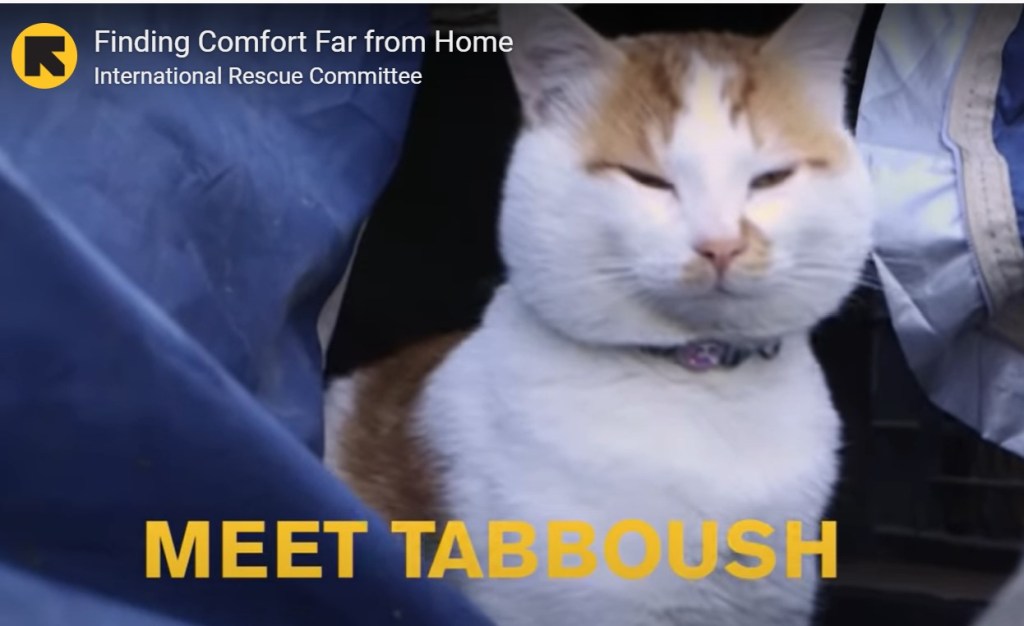
Even on YouTube, you might see an International Rescue Committee ad with Patrick Stewart somberly describing the plight of refugees or cat who hangs out with a refugee family.
But for anyone who wants to be immersed in the wonders of music, the finest art form humanity has ever developed, YouTube is still a pleasant sanctuary. YouTube music channels offer education and entertainment.
You can learn about music theory, dissect your favorite songs or see someone have a bit of fun mashing up songs and styles.
They’ve continued to put out new content while socially distanced. And honestly, they’re better binge-watching than anything on Netflix.
A few of the best:
Top 2000 a gogo: Dutch public radio station NPO Radio 2 has an annual countdown of the Top 2000 songs ever. To go along with it, they chat with the artists who made those songs — not necessarily in sitting interviews but with well-produced, short films.
Todd in the Shadows: A different take on popular songs comes from a music critic with a strange gimmick. He sits at a piano in the dark, visible only in silhouette, and mixes in videos from the artist in question. Many of his videos are reviews of recent pop hits — the latest from Justin Bieber, Ariana Grande, Halsey, Adele and so forth. But his best videos fall into a few categories:
Top Ten Best or Worst of a given year, sometimes the year that just passed but sometimes reaching back into history. Good example: Top Ten Worst of 1991 (Part 2).
One Hit Wonderland, dissecting not just a band’s one (or biggest) hit but also the history of the band and what happened to them after they hit it big. Good example: The Cardigans’ Lovefool, one of several cases in which he points out several other good songs by the band that may have been hits outside the USA.
Trainwreckords, looking at albums that sank an artist or band’s career. Good example: Styx’s Kilroy Was Here, one of the oddest things ever recorded by a major band.
Cinemadonna, looking at the films of Madonna. It’s a surprisingly long list. Good example: Dick Tracy.
Todd is candid, even cynical, but that just makes his praise that much more sincere. He also provides volumes of research, digging up videos you probably didn’t see on MTV.
Frog Leap Studios: From Norway, metal-minded musician Leo Moracchioli does ironic covers of pop songs with a lot of metal touches — ominous low guitars, double bass drum pedals, growling vocals, etc. His two biggest are Adele’s Hello (57 million views) and Toto’s Africa, the latter done before Weezer’s cover and with an English couple adding some guitar and a compelling female voice.
Ten Second Songs: Anthony Vincent occasionally tackles vocal challenges, but he’s better known for taking a song and recording it in 20 or more different styles. His patrons then vote to pick one, and he does the entire song in that style. His tour de force is Bohemian Rhapsody in 42 styles, including Johnny Cash, Frank Sinatra, Boyz II Men, Daft Punk, Janis Joplin, Bobby McFerrin, Bruno Mars, Aretha Franklin, Muse, medieval music, and a stunning David Bowie impression that should have won the vote for a full-fledged rendition. His Bowie impression won the vote from his Enter Sandman video.
Rick Beato: An Atlanta-based producer has plenty of insight into music theory and production. He makes some top 20 lists — best bass lines, best guitar sounds, etc. — and occasional editorials about trends he hates in the music industry. But his best videos are in the “What Makes This Song Great?” series, in which he goes through a song and isolates specific tracks — bass, guitar, drums, etc.
12tone: Want more music theory? This channel, named after thankfully devoid of a horrible musical style no one outside academia cares about, sketches out the various elements of specific songs.
David Bennett Piano: A young English pianist also has a theory-first approach with videos like “Songs That Use Polyrhythms & Polymeters” and “Picardy Third: When Minor Resolves to the Major Chord.” He also goes meta with lists of songs that “rip off” other songs or classical music.
I have no idea why my percussion teacher had such faith in a relative beginner at Duke, but I wound up playing Elliott Carter’s March at my senior recital after only two years of instruction.
I did not, however, play it as fast as this guy, who’s impressive but omits the fun switches from the heads to the butt end.
This guy uses each end of the stick, and he gives some commentary to explain how he goes about it.
He must have an unlimited budget, because he talks about experimenting with his sound in a concert hall. At Duke, we had three timpani in the rehearsal hall and three in the concert hall, and we had to take the big one back and forth on a grassy slope.
He made his own timpani mutes. So did I, in a sense. I used socks.
Also, when I turned up on recital day, I found all my stuff had been moved from the stage because the jazz guys had set up for a concert at night. Glad I got there early enough to switch it.
The piece uses rhythmic modulation, a complicated concept that would make Rush, Yes and the math-rockers that followed King Crimson break out a calculator. The idea is this — play for a while in a particular tempo, then play something that hints at a change, and then change the tempo so that, for example, a dotted quarter note in one measure is as long as a quarter note in the next.
This video takes you through the score so you have a visual. The piece starts at 105 beats per minute (unless you’re playing at light speed like the guy in the first video) and modulates at the 30-second mark (dotted quarter becomes quarter) to 140 bpm. At the 55-second mark, it gets freaky — the eighth notes in a 10/8 measure become quintuplets in a 2/2 measure. Then you have some measures in 14/16 before the dotted dotted quarter has the same value as a half note.
Of course, the performer can take liberties with all this. My teacher encouraged me to pause for a bit on the quarter note after the monster section (2:05 mark) to emphasize the change in mood.
Generally, such experiments lead to some unlistenable music. Even in March, the listener isn’t aware of all these tricks. I nailed this piece when I performed it, and the audience didn’t know the difference. One person who came out to listen said, “You played, and then when you put your sticks together, we clapped.”
But rock musicians sometimes sense a challenge to make things as complicated as this is. And that’s why you have Dream Theater, a band that’s more fun to analyze than it is to hear.
Count ’em — 108 time signatures (well, some time signatures are repeated, so it might be more accurate to say 107 time changes):
 Mostly Modern Media